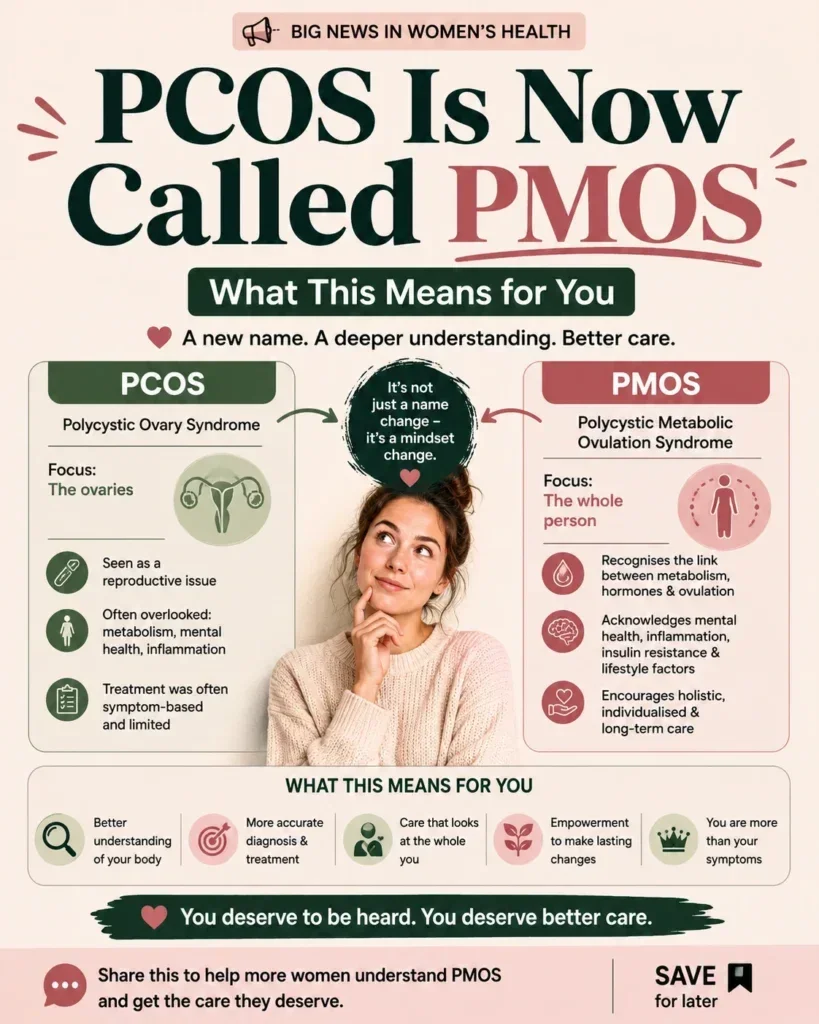
Polyendocrine Metabolic Ovarian Syndrome (PMOS)
Formerly Known As “Poly-Cystic Ovarian Syndrome (PCOS)”

Any women can have PMOS.
A common misunderstanding with
PMOS is that you must have cysts
on your ovaries.
It can be a symptom
but does not
guarantee that you do have PMOS.
PMOS is a hormone health issue that starts to show signs in women of childbearing age. If you have PMOS, you may not have periods very often. Or you may have periods that last many days. PMOS is driven by the effects of androgen and changes in how your body uses a hormone called insulin, which controls blood sugar.
Symptoms of PMOS
Acne or oily skin
High Testosterone
Depression
Excessive hair growth on face, chest, stomach or thighs
Infertility
Irregular menstrual periods
Patches of thick skin
Pelvic pain, sometimes severe
Weight gain
Treatment for PMOS
Currently there is no cure for PMOS. However, the symptoms can be treated. A healthy lifestyle is important to prevent long-term problems. Maintaining a low sugar and carbohydrate diet is key to trying to keep your hormones balanced. Contact your health care provider for additional treatment options.